
Quick Answer
UHMWPE vs HDPE selection mainly depends on load, impact, wear, and cost requirements.
If your project involves heavy load, impact, or continuous wear, UHMWPE is usually the safer choice.
If you are looking for a cost-effective material for general ground protection or structural use, HDPE is often sufficient.
Most selection mistakes happen when HDPE is used in applications that actually require UHMWPE.
1. UHMWPE vs HDPE: Why This Comparison Matters
In real industrial projects, material selection is rarely about “specs on paper”.
We often see the same problems:
-
- Ground protection mats cracking under crane loads
-
- Outrigger pads deforming after repeated use
-
- Wear liners needing frequent replacement in mining sites
-
- Projects overrunning budget due to wrong material choice
In most cases, the root cause is simple:
HDPE and UHMWPE were treated as interchangeable materials.
They are not.
2. What HDPE performs well in
HDPE is widely used in construction and industrial applications because it is:
-
- Cost-efficient
-
- Easy to machine and fabricate
-
- Chemically resistant
-
- Lightweight but strong enough for general use
Typical real-world usage:
-
- Temporary ground protection for light to medium equipment
-
- Construction site access roads
-
- General-purpose base plates and panels
 HDPE works best when the load is controlled and predictable.
3. Where UHMWPE becomes necessary
UHMWPE is not just “stronger HDPE”.
It behaves differently under stress:
-
- It resists impact rather than cracking
-
- It performs better under repeated heavy loading
-
- It has very low surface friction (it slides instead of wearing fast)
Typical real-world usage:
-
- Crane outrigger pads under high tonnage loads
-
- Mining chute liners and wear strips
-
- Heavy equipment sliding / contact surfaces
-
- High-impact structural support blocks
UHMWPE is often preferred where impact, abrasion, and repeated contact are major service conditions.
4. Practical differences
| Real concern in projects | HDPE | UHMWPE |
|---|---|---|
| Cracking under impact | Possible in heavy load cases | Very resistant |
| Wear from repeated contact | Moderate | Excellent |
| Long-term deformation under sustained load | Depends on load, thickness and support conditions | Also requires proper sizing for sustained loads |
| Cost per project | Lower upfront cost | Higher, but longer lifespan |
| Maintenance frequency | Higher | Lower |
5. The most common selection mistake
One of the most frequent issues we see from clients:
“We used HDPE because it looked similar and cheaper.”
This usually leads to:
-
- Shorter service life
-
- Unexpected replacement costs
-
- Downtime in equipment operation
-
- Safety concerns under heavy load conditions
In real engineering applications, the cost of failure is always higher than the material price difference.
6. Simple selection rule
For initial material selection, a few practical factors can usually narrow down the choice. Final sizing should still consider load, thickness, contact area, and support conditions.
Choose HDPE if:
-
- Load is light to medium
-
- Usage is temporary or non-critical
-
- Budget is the main constraint
Choose UHMWPE if:
-
- Heavy equipment is involved (cranes, mining machinery)
-
- Impact or abrasion is continuous
-
- Long service life is required
7. Final takeaway
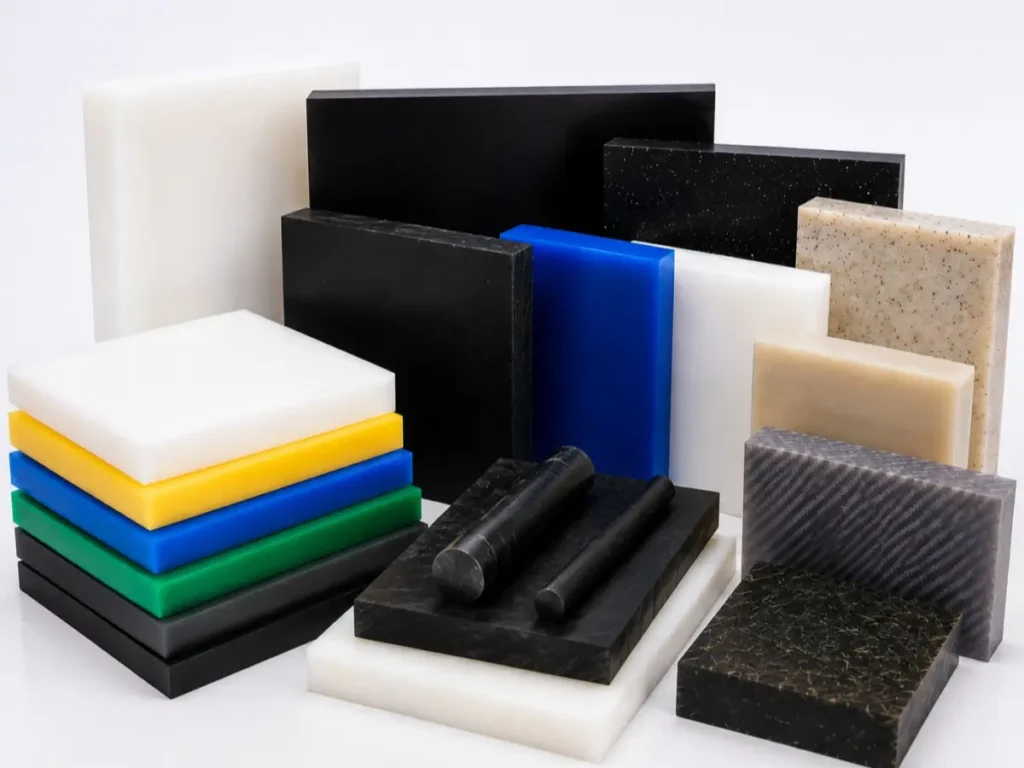
HDPE and UHMWPE are often confused because they look similar.
But in real applications:
-
- HDPE = economical + general purpose
-
- UHMWPE = high-load + high-wear + safety-critical environments
The right choice is not about material cost —
it’s about avoiding operational failure.
Need help selecting material for your project?
If you are not sure whether HDPE or UHMWPE is suitable for your application, we can help evaluate based on:
-
- Load conditions
-
- Equipment type
-
- Working environment
-
- Expected service life
Contact us for a practical recommendation based on real project experience.